Tag: J. Kenneth Pearce

  • Unfolding Grandma’s Secret: An Antique World Map Journey

    Unfolding Grandma’s Secret: An Antique World Map Journey

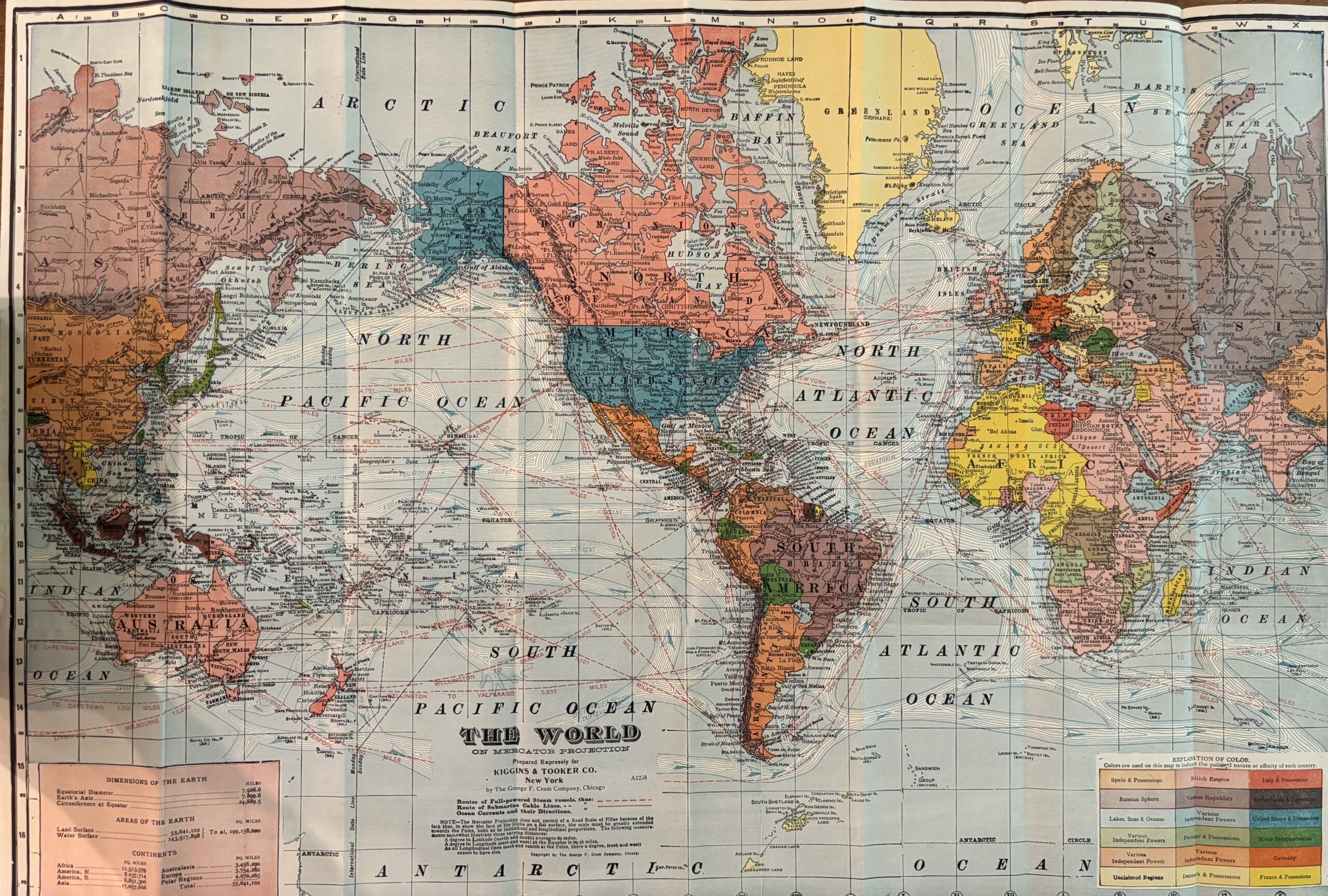
    Today’s exciting find: a historical 103-year-old world map, hidden in Grandma’s steamship travel journal!

    This 1922 antique world map (made by the George F. Cram company, Chicago; for Kiggins and Tooker CO, New York) reveals how far the British Empire and other ruling empires extended. (You can see the color-coding chart, bottom R on the map.)

    The map also includes dashes showing steamship travel paths through the seas.

    This helps me trace where Grandma’s ship sailed and stopped in 1926. The color-coding shows me who ruled the countries she passed through at that time (unless that changed shortly after the map was published.)

    As a bonus, note also the solid lines marked in the seas, indicating submarine cable lines from World War 1.

    (Later in this post you’ll see how the map unfolds from the journal.)

    Sometimes I think my own home is a historical wonderland!

    I have so many boxes of antique handwritten photos, letters, and other memorabilia, it’s easy to lose track of what I have. I joke that I came from a family of hoarders. But I DO relish items hoarded now for over a century which are now in my possession.

    It’s a historical writer’s dream, right?

    For the past year, I’ve searched for such a map online. In the meantime, I had this all along!

    I’m finally working more earnestly on my narrative nonfiction book about the years Gladys Gose Pearce and John Kenneth Pearce lived in India (1923-1933.)

    [My excuse for missing this map: I was temporarily derailed for a few years, assembling and editing a 1950s-1960s collection of vintage scifi short stories, written by yet another family member. See Gremmie’s Reef, now in print.]

    It helps that I’ve now switched my office research piles from vintage science fiction manuscripts back to the India artifacts. So I now have more at my fingertips, including this travel journal.

    Here’s how this antique world map physically unfolds:

    When Gladys wrote in this journal, she’d just begun her steamship journey. It would last 51 days.

    She noted that she boarded the S.S. President Garfield in San Francisco, California in August of 1926. She then had various stops in other countries and ship changes before finally landing in Madras, India to marry Grandpa Ken.

    A bit of their romantic history:

    Ken graduated from high school in Walla Walla, WA with Gladys in 1915. They then both attended the University of Washington in Seattle.

    After college graduation, Gladys went to San Diego to teach.

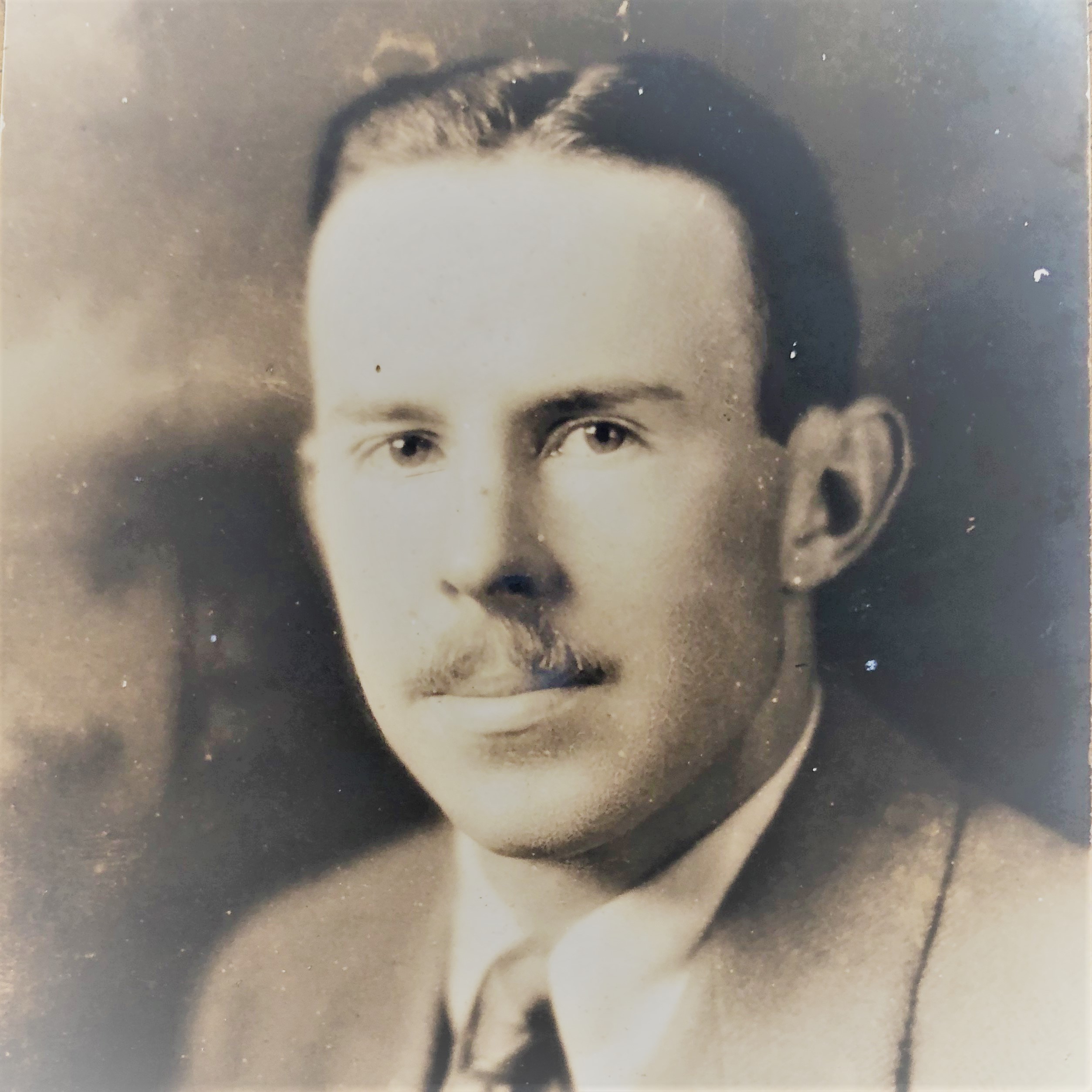
    In 1923, 25-year-old Ken (J. Kenneth Pearce) was sent to South India, to work as a Forest Engineer for the British Indian government.

    In the fall of 1925, Ken got a short home leave to visit Washington State. He then proposed to Gladys. It was about time! For ten whole years they’d been close friends. But during that visit, sparks flew.

    Gladys and Ken would live in India until 1933: first in South India, and later in the Andaman Islands.

    The Andaman Islands

    The Andamans are tiny specks on this world map, in the Bay of Bengal. The islands are east of the Indian mainland, near Burma (now Myanmar) and Siam (now Thailand.)

    This particular map has the Americas in the center (being published in the USA.) So the R edge of this map shows the mainland of India, while the L edge has the Andaman Islands.

    If you zoom in close you can see where Gladys put an arrow pointing to them. Seeing it on a globe or other-centered map might make it easier to visualize this.

    Still, what a great find this is! I now have this map as my computer screensaver.

    I’m sure the cartographers who drew it 103 years ago could have never imagined THAT.

    What’s in your own attic, basement, or closet? What surprise about your own ancestors awaits you…or have you already found?

    Please share your own discoveries in a comment, or email me via my Contact page. I’d love to hear from you.

    Laurie
  • Grandpa and the Maharaja of Jaipur

    Grandpa and the Maharaja of Jaipur

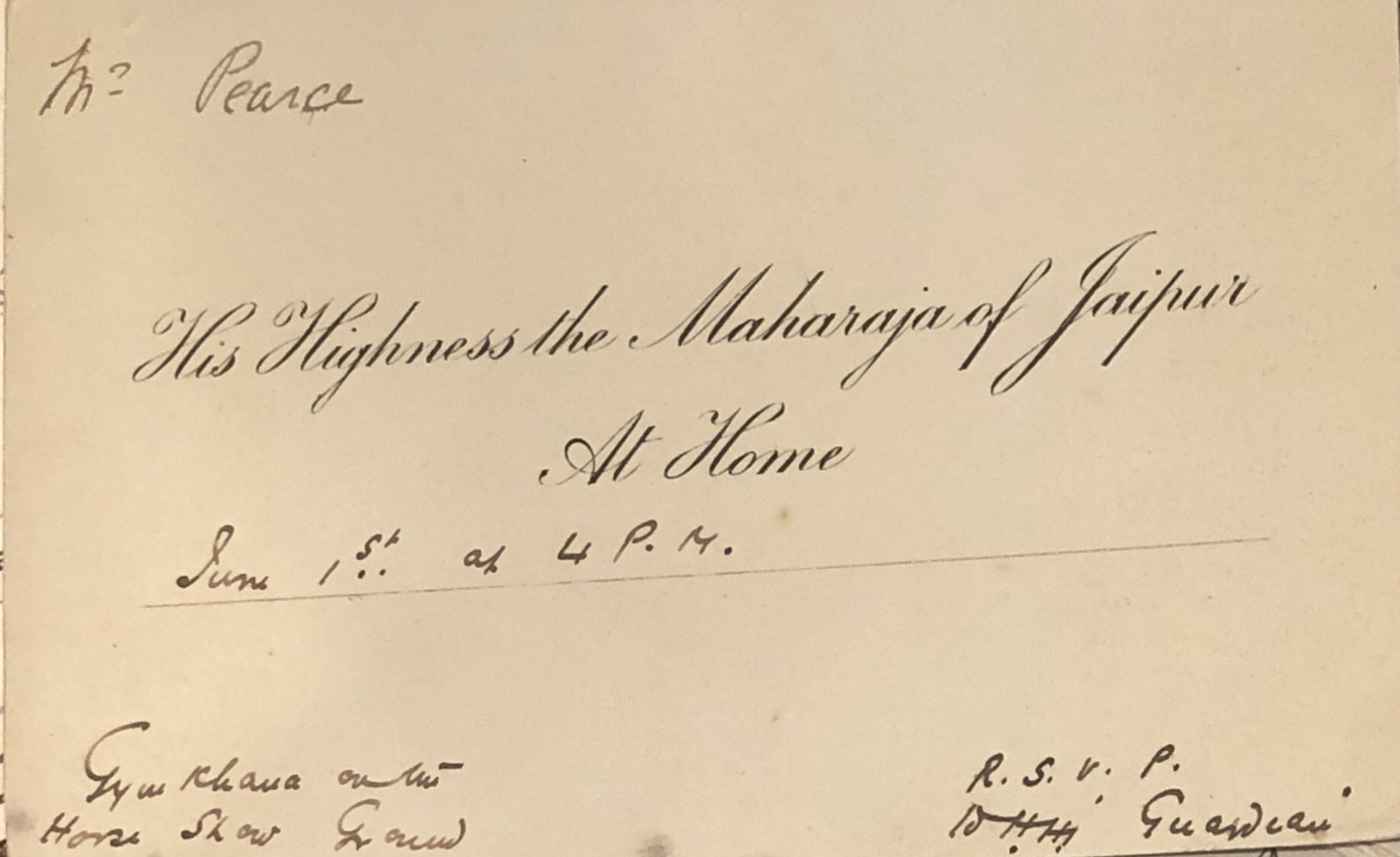
    The book The Henna Artist (by Alka Joshi) includes scenes set in the Indian palace of the Maharaja of Jaipur. That brings alive a 1920s invitation in my possession–from that maharaja to my American grandfather, J.K. Pearce.

    This is an invitation to my grandfather from His Highness the Maharaja of Jaipur. The location and time: At Home (the palace) June 1st at 4 P.M. (most likely a year between 1923 and 1926.) The event was a Gymkhana (featuring races and competitions) on the Horse Show Lawn.

    While this seems a huge departure from my recent blog posts on vintage sci-fi and Reawakened Worlds, it’s not quite the stretch you imagine. Yes, 1920s historical nonfiction and 1960s science fiction are different genres. But what they have in common is the past.

    The connection between the two genres is an abundance of artifacts inherited from my own family. They surround me in my home office.

    On one hand, I possess vintage science fiction manuscripts, author-agent letters, and magazines (Galaxy, IF, and others) with short stories written by my stepfather in the ’60s.

    Yet I’m also surrounded by 1920s ephemera. That includes photos, film reels, diaries, letters, and unusual objects from my maternal grandparents’ time in British Raj India (1923-1933.)

    Sometimes I can’t recall which time period I’m in, particularly 2024!

    But back to how Grandpa met the Maharaja of Jaipur, and why a young American man from Washington State was in India to begin with…

    Grandpa studied Forest Engineering at the University of Washington, then as an associate professor attended the Pacific Logging Conference. There he met a man who was working in the logging industry in India. That man encouraged my grandfather Ken (J. Kenneth Pearce) to apply for, take over, and expand his position.

    So at about age 26, Ken was hired by government of India (then under control of the British.) He assumed a position of high authority in South India which he held for ten years. His job was to oversee elephant logging camps, introduce machine power into the camps, and help establish sawmills. At times he also functioned as a district magistrate.

    In India, Ken he was called Sahib and Master Pearce, and Grandma Gladys was his Memsahib.

    That felt awkward to them at times. There was great pressure for them to hire many servants. Yet both of my grandparents were highly industrious, hard-working people. They often simply wanted to do the work themselves.

    Grandpa worked from sunup to sundown, often shoulder-to-shoulder with his Indian laborers (most who were ex-convicts.) Grandma sewed clothes for herself and Ken. As a physical education teacher, she was hired to evaluate physical education programs in schools in Madras and other cities.

    As for the Maharaja of Jaipur–I believe this particular invitation was for just Ken, before Grandma Gladys sailed to marry him in 1926. Then Ken and Gladys lived in Tamil Nadu region until 1929, primarily in Madras (Chennai) and Ooty. (1930-1933 they lived in the Andaman Islands.)

    Ken managed logging camps throughout South and Southwest India. The University of Washington archives hold artifacts related to the forestry work of J.K. Pearce in India. However, I hold all his personal mementos from that time and place, plus additional logging ephemera.

    Grandma also met a maharaja: the Maharaja of Mysore, who had a summer palace in Ooty (the Fernhills Palace.)

    Gladys wrote of a funny (or disconcerting?) event that took place on the palace lawn. Before moving to India, she had saved money from her job as a junior high physical education teacher. On the steamship ride over, during a stop in Asia, she bought her first set of pearls and treasured them.

    At the palace, a young child (one of the princes) approached her bedecked with jewels. He pointed at her pearls and demanded to have them. As you can imagine, she clutched them, and gave him a firm “No.” She had worked too hard for those!

  • A Story About a Love Story

    A Story About a Love Story

    How Adventures in the Attic led to an India news story, about a 1920s American romance & a jungle honeymoon

    Last Sunday in India, a Mid-Day news article published details about Gladys’s Jungle Diaries after a reporter there discovered this blog.

    It’s always fun to throw a post into the wind, then see it blow across the world to another country and grab someone’s interest there. A bloggers dream, actually. Oh, the wonders of the internet!

    A week ago, reporter Prutha Bhosle emailed me to request an interview about my book in progress on the adventures of Gladys in India. (She’d was intrigued by my post Adventures in the Attic.) We arranged for me to email her details, then we’d audio Skype. Scheduling the latter proved to be a bit tricky: my day is her night! With a 9 1/2 hour time difference, who would be doing the interview in pajamas? It did help that she was a night owl.

    I thought hard about what details would be most relevant to people in her own city of Mumbai (Bombay, when it was part of British India). It seemed to me that Gladys and Ken’s 1926 jungle honeymoon adventures in Kerala India (near Mumbai) including the story One Less Crocodile would interest Prutha and her audience most.

    But it turned out that Prutha was especially intrigued with how near-100-year-old original handwritten letters unfolded a love story:

    (more…)
  • 1926: Silent Valley

    1926: Silent Valley

    In 1926, Kerala India, Gladys and Ken finish their honeymoon hiking in Silent Valley. (How silent? Can screams still be heard?)

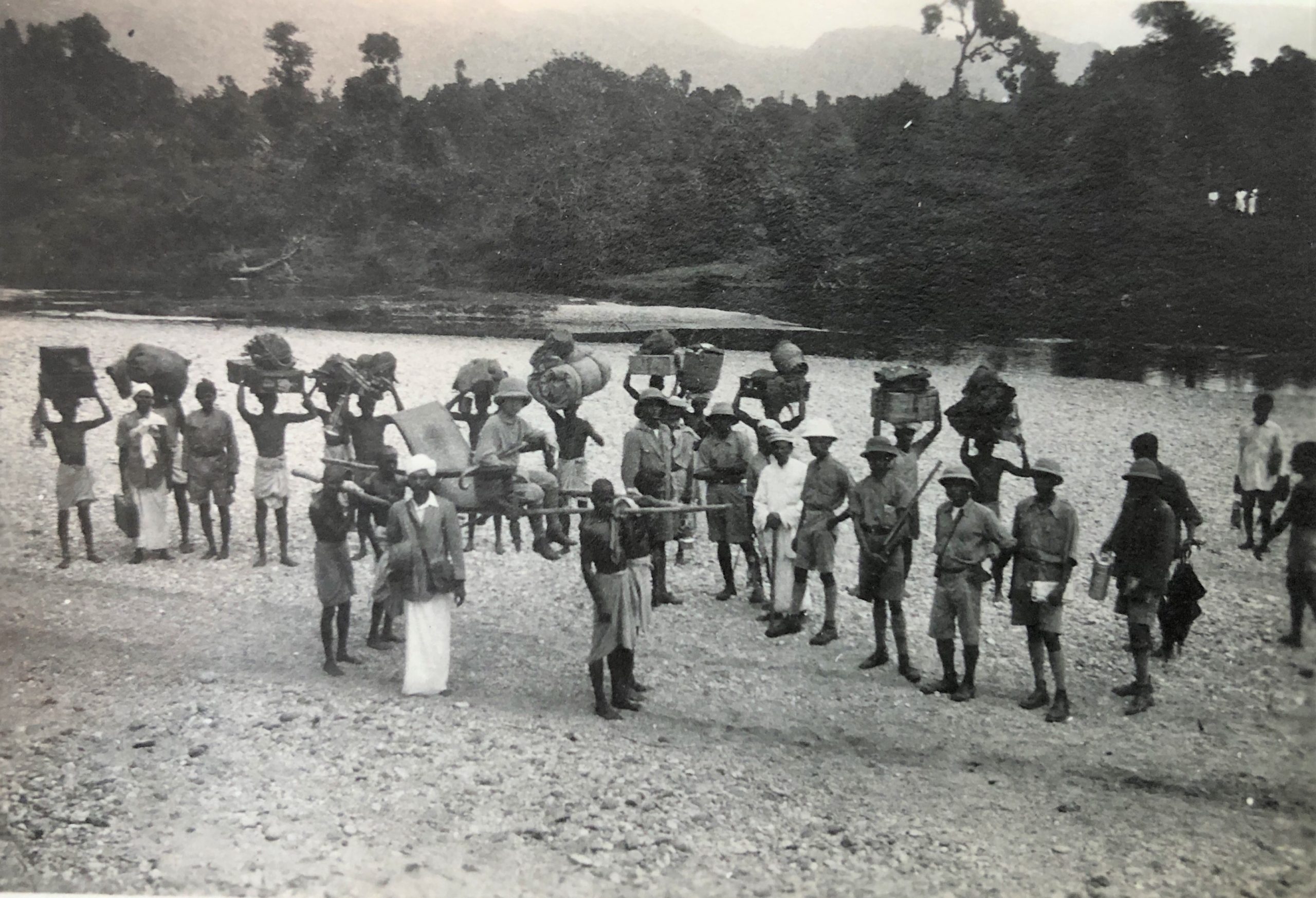
    Photo by J. Kenneth Pearce of their group in Silent Valley with Gladys on the chair.

    1926, Gladys Gose Pearce, Kerala India

    Dear Diary,

    Today we finished up our honeymoon with a trip to Silent Valley, where few white men and fewer women have ever been. There was no road. We had to hike in with our camping necessities carried on coolie’s heads.

    NOTE: In this context nearly one hundred years ago, coolie meant laborer. I‘m aware this term is considered insensitive now in many countries. Since this is an excerpt from an actual diary from 1926, to alter it would be to alter historical context. Gladys and Ken simply went by terms they were told to use back then, and in their minds the term simply meant a hired laborer.

    I had been looking forward to some needed exercise on this trip. But word had gone ahead that Ken, the Chief Engineer Sahib, was bringing his Memsahib, so when had we arrived at the end of the road to meet the coolies, we found that the Indian Ranger had arranged to have a chair provided to carry me. Two long bamboo poles had been lashed to an office chair and four husky coolies stood by.

    “Imagine me in a chair!” I snorted to Ken. “I don’t need or want a chair!”

    I, Laurie, must interrupt here to note that Gladys was very athletic –a former swimmer and basketball player, and a physical education teacher (and yes, that was unusual, even in America, in the early 1900s.) She was also a very independent woman, so felt no need to have others carry her.) Now, back to Gladys:

    Ken told me, “The coolies are hired and I’ll have to pay for them anyway. We might as well take them, and use the chair for crossing streams. The ranger thought he was being considerate of you.”

    The servants and peons we left behind bid us a rather anxious farewell because they thought going into Silent Valley wasn’t such a good idea. Only Freddy our butler accompanied us. Ken’s Shikaris (gun-bearers and trackers) led the way, followed by Ken, me on foot, chair coolies and porter coolies, all strung out single file.

    As we climbed the steep trail, the sun grew hotter. Although Ken reduced his usual long stride to that of the rest of the party, I was hot and tired. I glanced back at the chair but pride forbade my mentioning that I no longer felt it to be useless. Ken seemed to have eyes in the back of his head. He called a halt and said casually, “You might as well use the chair.”

    Such welcome words! I took my place on the seat. The coolies lifted the chair poles to their shoulders and set off at a steady gate. It was not unalloyed pleasure, however. One coolie seemed a little shorter than the others, so I felt at any time I might slip from the chair and down the precipice at the edge of the path. A shift of coolies made no difference, for the path itself sloped to the outside bank. Thus the coolies on that side were lower than the two on the inside near the bank.

    From Laurie: This made me giggle a bit, imagining Gladys hanging on for dear life, when she was supposed to be resting!

    A Respite on a Veranda

    Once we reached the summit, I was delighted to walk again, then as we next hiked downhill the going was easy. The place where we’d stay that night was a welcome sight: a little square one-room house, perched up on four iron-wood posts. The stairs led to a diminutive serambai veranda where we sat to gaze across the valley. As we rested, Freddy brought us a refreshing drink of fresh green coconut milk.

    But then… (creepy crawly warning!)

    The next day I made the acquaintance of the most detested denizen of the jungle, the leech. Looking like a small animated rubber band, it crawls like an inchworm up your legs or through the eyelets of your shoes, seeking a spot where the vein lies just under the skin. You do not feel it bite the tiny triangular hole through which is sucks your blood. You’re not aware of its presence until the leech drops off, distended with blood to the size of your little finger, while the hole left behind continues to ooze. For days after, whenever you bathe, the bleeding starts again.

    The Indian Forest Guard who accompanied us through the deep jungle carried a little bag of damp salt on the end of stick. Whenever he spied a leech he touched it with the salt so it curled up and dropped, yet while one was being routed, another would crawl on, undetected.

    I asked, “Are the leeches always this bad?”

    “Oh, no, Madam; in the dry season the ticks come.”